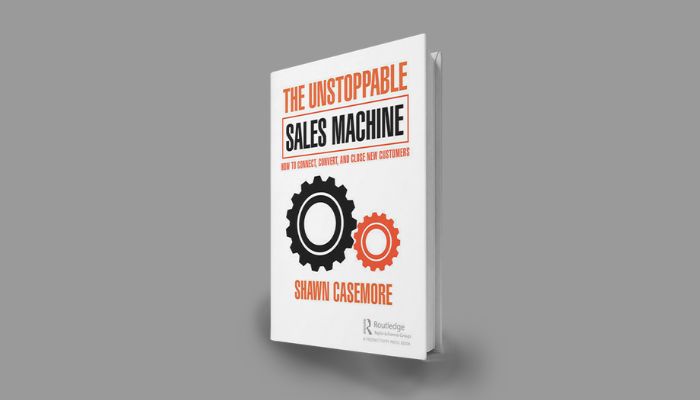
Learning the unstoppable sales methodology doesn’t have to be complicated. When it comes to sales enablement, top-performing sales teams rely on repeatable sales systems—not guesswork. That might come as a surprise, considering that companies in the United States spend over $13 billion each year on upskilling their sales teams.
Effective sales skills like objection handling, value selling, and solution selling are only part of the equation. Without a proven sales methodology to connect, align, and apply those skills, processes like lead qualification lack consistency amongst team members, resulting in inconsistent sales results.
After nearly two decades of working with sales teams across dozens of different sectors in B2B sales, I have developed the Unstoppable SalesSM Machine Methodology. The results of introducing this proven sales strategy include a 20% year-over-year increase in sales. The methodology enables a scalable sales process, improving the volume, quality, and speed of ideal sales prospects throughout your sales cycle. Other sales methodologies and sales frameworks lack the same level of scalability.
What Is a Sales Methodology (and Why It Matters)?
What is sales enablement, and how does the Unstoppable SalesSM Machine Methodology differ from other options? To begin with, let’s clear up some common misunderstandings.
A sales methodology is the guiding principles and best practices that define how a sales team approaches selling to achieve consistent, repeatable outcomes. It covers the entire sales cycle. A sales process, on the other hand, is a subset of a methodology. For example, steps to accelerate a qualified prospect through the sales funnel stages to a close.
There are many different types of sales methodologies in practice today. The Challenger Sales methodology emphasizes challenging a customer or prospect’s thinking and assumptions. The goal is to bring new insights and value to their business, enabling them to make informed decisions. It was developed in 2011 by Matthew Dixon and Brent Adamson. Although this process can be effective, it hinges on challenging a prospect’s assumptions, which can turn some prospects off.
Understanding the Unstoppable Sales Methodology
The Spin Selling methodology consists of Situation, Problem, Implication, and Need-Payoff. Developed by Neil Rackham in the 1980s, it’s intended to ensure sales gain a deep understanding of customer needs. SPIN Selling offers some practical methods for diving into a prospect’s needs, but fails to address the complexities of today’s well-informed, well-educated prospects.
The Sandler Method is a low-pressure, consultative approach to selling, focusing on a seven-step process that identifies the prospect’s pain points, budget, and decision-making process through collaboration with the prospect. The methodology was developed by David Sandler in 1967. The Sandler method is the longest standing of the three above; however, it is a much more passive approach to selling, something that can fail to earn and retain the attention of today’s busy prospects.
The Unstoppable SalesSM Machine Methodology is a sales enablement strategy for today’s highly complex selling environment. It’s the best sales methodology for earning prospect attention and reorienting their perceptions of your product or service. Think of it as a sales effectiveness framework that improves upon your existing one, addressing the challenges posed by today’s complex, highly demanding prospects.
The Unstoppable Sales Methodology: Overview
Prospects today spend countless hours researching their purchase and, as a result, have little patience or time to spend with salespeople. Their research shapes perceptions of what they need and what the best solution might be, leading them to use price as a filter to identify potential products or services. Unlike some of the more dated sales methodologies, the Unstoppable SalesSM Machine Methodology sets you apart from the competition, earning the prospect’s attention, interest, and trust.
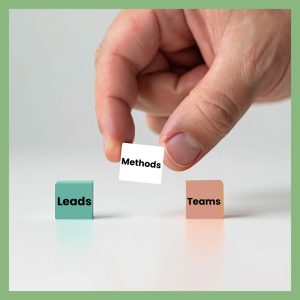 The methodology consists of three core components tailored for high-performing individuals and teams.
- Leads: Understanding, attracting, and prioritizing the best-fit leads.
- Methods: Introducing the process and technology to close new leads consistently.
- Team: Onboarding, upskilling, and leading a high-performing sales team.
Within each of these core components, the program identifies, optimizes, and launches the proper methods, tools, resources, and skills to rapidly improve closing ratios, overcome common objections, and build trust with ideal prospects.
The Three Core Components of the Unstoppable Sales Methodology Explained
Lead Flow – Create a steady flow of qualified leads who are ready to buy
Achieving a steady flow of ideal, qualified leads requires introducing methods in four key areas of your sales process. Initially, you need to position yourself in your market and clearly articulate your value proposition to prospects. Then ensure each prospect’s experience differs from that of your closest competitors. With your sales process differentiation in place, developing specific messages and provocative questions helps you form a dialogue with your prospects, unlike anything they’ve experienced.
Sales Methods – Introduce strategies to convert ideal leads into paying customers
There are four key methods you need to accelerate leads through your sales cycle stages, or sales pipeline. Get these stages right, and you’ll have complete control over how quickly you accelerate prospects through your pipeline and how effectively you can close them.
- Strategy: The specific approach, language, and methods to achieve your sales targets
- Process: Best practices that create consistently predictable sales outcomes
- Technology: “Right-fit” technology that optimizes the buyer’s journey and improves sales productivity
- Targets: Meaningful targets that motivate your sales team to new levels of performance
Team Performance – Build a high-performance sales culture and dominate your niche
When it comes to building and leading a high-performance sales team, there are four fundamental areas to address. These are not only skills to adopt and apply, but also the foundation upon which to build a sales culture.
Unstoppable Sales Methodology Best Practices
- Leadership: Coaching methods that elevate individual and team performance
- Hiring: Criteria for selecting new sales hires that fit your culture and deliver results
- Onboarding: Accelerate new hire performance to achieve sales targets predictably.
- Skills: Adopt modern skills for sales that are effective for today’s sales prospects
The Unstoppable SalesSM Machine sales methods work because they are built for today’s B2B sales cycle, meeting buyers where they are and navigating new prospect behaviours and expectations.
Why This Methodology Works (Backed by Real Results)
What makes the Unstoppable SalesSM Methodology unique is that it can be introduced as a system or in parts, depending on the specific needs of the company. To this point, we’ve discussed why the sales model is an effective sales methodology; let’s look at specific examples of outcomes achieved by those who have deployed it.
Client Example #1 – Insurance Industry
An insurance brokerage was struggling to close new clients consistently. They were investing heavily in online advertising; however, they weren’t having much success converting their leads. We introduced improvements to their methods using the Unstoppable SalesSM Methodology, creating a process, scripts, and measures of success to track each lead’s time and interests.
The results were immediate. We identified gaps in how sales team members were handling leads, and by introducing best practice scripts and language, conversions improved. The introduction of our Unstoppable SalesSM Scorecard enabled the client to continue identifying and improving their teams’ methods, accelerating their speed to close.
Client Example #2 – Capital Equipment Sales
A capital equipment dealer was having difficulty penetrating a new market. They were relying on their sales team to perform manual outreach, with little success. To improve the quality and flow of ideal customers, we focused on implementing the LEADS component of the Unstoppable SalesSM Methodology. We interviewed key and target customer accounts to uncover their needs, language, and decision-making measures. Equipped with this information, we designed outreach strategies and language that appealed to ideal customers, creating a magnetic pull for the company.
As a result, the company began generating more leads within 30 days, all of which were within a buying window. The improvement in the quality and quantity of leads resulted in higher closing ratios and larger deal sizes.
Client Example #3 – Professional Services
A legal firm was struggling to generate a consistent flow of newly qualified prospects. Their team was using different methods to prospect, with varied results. The lack of consistent practices led to a shortage of upsell and cross-sell opportunities.
Using the TEAM aspect of the Unstoppable SalesSM Methodology, we brought together the entire sales and business development teams, capturing proven internal best practices, and aligning them with the methodology. From this, the team agreed on a new method to generate and convert clients, incorporating steps to introduce upsells, cross-sells, and referrals.
The legal firm began experiencing more consistent lead flows and better collaboration amongst the entire team. Deal sizes increased, and more clients converted to a retainer.
How to Apply the Unstoppable Sales Methodology in Your Business
If you have read The Unstoppable Sales Machine book and want to implement this proven sales methodology into your business or sales team, use the following steps:
Here are the six key steps to implement the Unstoppable Sales methodology and drive exceptional sales results:
1. Customize Your Sales Process for Leads
Develop your value, differentiate your experience from competitors, and define your ideal customer journey. Customizing your sales process here ensures you connect with high-quality leads.
2. Implement a Sales Methodology
Create your targeted sales strategy, develop best-practice processes, organize your CRM software to track deal stages, and set clear targets for your weekly sales scorecard. A strong methodology drives consistent sales results.
3. Invest in Sales Methodology Training
Ensure strong leadership feedback and coaching to provide guidance and support; address skills gaps through practical sales training; develop a hiring and onboarding strategy that ensures you only hire best-fit candidates to complement your team and methods. The right people with the right skills will ensure you meet or exceed your sales goals.
4. Align All Three Pillars
Integrate your leads strategy, methods, and team so they work together seamlessly. Identify areas of weakness in your sales methodology that warrant further improvement. Alignment amplifies sales results exponentially.
5. Measure and Optimize
Develop and launch your sales scorecard to track the most important KPIs on a weekly, monthly, and quarterly basis. Use scorecards to analyze performance and continuously refine your customized sales process based on what’s working. That which you measure gets improved.
6. Scale Systematically
Build your sales playbook by documenting best practices, expanding your sales training and sales coaching, and replicating across new teams and territories for predictable sales results.
Start Your Unstoppable SalesSM journey today!
FAQs (SEO Booster + User Value)
 Here are some common questions and answers related to the Unstoppable SalesSM Methodology and its application.
What is the difference between a sales methodology and a sales process?
A sales methodology is a framework providing the principles, methods, and structure to achieve a specific goal. Alternatively, a sales process is the exact, step-by-step actions used to carry out tasks within the sales methodology.
What makes a sales methodology successful?
The most successful sales methodologies incorporate proven processes and methods into a series of complementary actions that can be easily applied, measured, and improved over time. Most importantly, the sales methodology must be relevant to current times, meaning it must address the issues and challenges users face today, not 20 years ago.
How do I choose the correct sales methodology for my team?
It’s important to consider what you sell and the environment you sell into when choosing the proper sales methodology. For example, using a method that challenges a prospect might work if you are selling a unique product or service, but it might not be as effective if you sell a commodity.
Can I use parts of different sales methodologies?
Many sales professionals take different components of sales methodologies and piece them together. The problem with this approach is that the method isn’t applied as intended; therefore, the outcomes won’t be as expected. In other words, you are better off sticking with a proven, current method and applying it in its entirety.
What is the Unstoppable SalesSM Methodology based on?
The methodology was developed following work with hundreds of companies globally that sell both products and services, capturing methods and processes that work to earn the attention of, connect with, and close today’s prospects. Unlike many of the methodologies listed above, the Unstoppable SalesSM Method incorporates modern selling strategies, including social selling and its growing influence on today’s prospects.
Conclusion
When it comes to creating predictable sales results, using a proven sales methodology is the only option. You can always piece together your own method or sell based on your intuition; however, that results in selling based on what you are comfortable with, not what works.
The Unstoppable SalesSM Methodology is different than other methods you’ll find. It addresses the needs and expectations of today’s busy, highly educated prospects. It also gives you the ability to easily scale up or back your efforts to maintain predictable sales results.
As a next step, complete your Unstoppable SalesSM Assessment here.
© Shawn Casemore 2026. All Rights Reserved.
Share This Article
Choose Your Platform: Facebook Twitter Google Plus Linkedin