Setting the Stage: The Need for a Sales Framework
Traditional sales approaches are increasingly less effective. Recent studies show that nearly 80% of all sales leads never convert into sales.
Inconsistent results and unpredictable revenue streams are the norm for many sales professionals today. The problem isn’t lack of effort—it’s the absence of a systematic approach that creates repeatable, scalable outcomes.
The reason?
Most sales organizations operate without a cohesive framework, relying instead on individual talent (i.e., hero-sellers) and ad-hoc strategies. This creates three fundamental problems:
Problem #1: When a top performer leaves, revenue goes with them.
Problem #2: When market conditions shift, teams scramble to adapt.
Problem #3: New hires struggle to meet sales targets and become disengaged in the process.
The result is a perpetual cycle of feast or famine that stunts growth and creates unnecessary stress.
What successful companies need is a proven methodology that transforms sporadic sales activities into a predictable engine for growth. The Unstoppable Sales Machine framework addresses this critical gap by providing a systematic approach to connecting, converting, and closing prospects consistently.
This isn’t about quick fixes or motivational tactics—it’s about building a sustainable sales system that delivers results regardless of market fluctuations or personnel changes.
Understanding how this framework operates becomes the foundation for transforming any sales organization from reactive to unstoppable.
Understanding the Unstoppable Sales Machine
The Unstoppable Sales Machine represents a fundamental shift from reactive selling to strategic, system-driven revenue generation. Rather than leaving sales outcomes to chance or relying solely on individual talent, this framework creates a predictable, repeatable process that transforms how businesses approach customer acquisition.
At its core, the methodology developed by Shawn Casemore addresses the critical disconnect between marketing efforts and sales results. Unlike traditional sales approaches that focus primarily on closing techniques, the Unstoppable Sales Machine emphasizes the entire customer journey from initial awareness through conversion and beyond.
The framework operates on three foundational pillars: systematic lead generation, strategic conversation management, and conversion optimization. Each component builds upon the others, creating a cohesive system that eliminates the feast-or-famine cycles that plague many businesses.
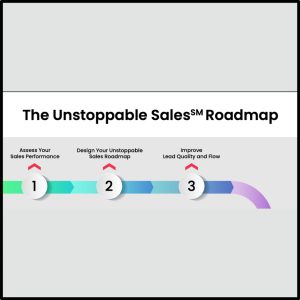
Click the image to upload your copy of The Unstoppable Sales Roadmap
Typically, companies implement isolated tactics without understanding how they interconnect, resulting in inefficient resource allocation and inconsistent results.
This comprehensive approach recognizes that modern buyers have fundamentally changed how they research and make buying decisions. The system adapts to these new buying behaviors by creating multiple touchpoints and nurturing sequences that guide prospects naturally toward purchasing decisions.
The Unstoppable Sales Roadmap provides the structure needed to implement these interconnected components effectively.
The true power of this framework lies in its ability to create predictable revenue streams while reducing dependence on individual sales performance, setting the stage for understanding its key operational components.
Key Components of the Unstoppable Sales Machine
The Unstoppable Sales Machine operates through five interconnected components that work together to create predictable revenue streams. Unlike traditional approaches that rely on individual sales prowess, this sales framework systematically addresses every stage of the customer acquisition process.
Foundational Components
The first component focuses on strategic positioning – clearly defining your unique value proposition and target market. This involves developing a power statement that immediately communicates your value to prospects. Without this foundation, even the most sophisticated sales efforts scatter their energy across inappropriate audiences.
The second element centers on systematic lead generation through multiple channels. Rather than depending on referrals or cold calling alone, the framework integrates digital marketing, content creation, and strategic networking and association involvement to create consistent prospect flow.
Conversion and Optimization Components
Process standardization forms the third pillar, establishing repeatable steps for qualifying prospects, conducting discovery calls, and presenting solutions. This eliminates the inconsistency that plagues most sales teams, where results depend entirely on individual personalities.
The fourth component involves technology integration – using CRM software and automation tools to track progress and eliminate manual tasks. The goal of technology is to ensure that sales professionals increase their direct selling time (time spent in front of potential new customers) while reducing the administrative burden.
The final element focuses on continuous improvement through data analysis and systematic testing of different approaches.
These five components create a self-reinforcing system where each element strengthens the others, transforming sporadic sales success into predictable business growth.
How It Works: The Mechanism Behind the Framework
The Unstoppable Sales Machine operates as a systematic approach that transforms traditional sales activities into predictable revenue generation. At its core, the framework creates momentum through interconnected processes that build on one another, much like a well-oiled manufacturing line.
The mechanism begins with strategic lead identification, where businesses move beyond random prospecting to target high-value opportunities. This sales system then channels prospects through structured touchpoints designed to build trust and progressively demonstrate value.
Rather than relying on individual sales skills alone, the framework creates repeatable steps and stages that guide prospects naturally toward purchasing decisions.
What makes this approach unstoppable is its self-reinforcing nature. Each successful interaction generates data that improves future engagements, while follow-up and nurture systems ensure no opportunity falls through the cracks.
The framework also incorporates feedback loops directly from customers and prospects that continuously optimize conversion rates, identifying what’s working to appeal to prospects’ and customers’ needs and interests.
A critical element is aligning marketing efforts with sales activities to create a seamless experience from initial awareness through final purchase. This integration eliminates the common disconnect between marketing-generated leads and sales team capabilities, as outlined in The Unstoppable Sales Machine.
Next, let’s examine how this framework applies in real-world business scenarios.
Example Scenarios: Applying the Framework
The Unstoppable Sales Machine adapts to various business contexts, making it valuable across different industries and sales environments. Consider a technology consulting firm struggling with inconsistent lead generation. By implementing the framework’s systematic approach, they establish automated prospecting sequences that identify qualified prospects, engage them with targeted content, and guide them through structured discovery calls—transforming sporadic inquiries into predictable monthly revenue.
Manufacturing companies face different challenges but achieve similar results through the framework’s adaptability. Equipment manufacturers have used the system to standardize their sales process across regions, ensuring every prospect receives consistent messaging and follow-up, regardless of which sales representative handles the account.
Service-based businesses particularly benefit from the framework’s emphasis on relationship-building and value demonstration. Several financial advisory firms, for example, have leveraged the system to nurture long-term client relationships while systematically identifying expansion opportunities within their existing client base.
The framework also supports comprehensive sales training and sales skills development initiatives, helping organizations onboard new team members more effectively by providing clear processes and measurable outcomes. This systematic approach ensures consistent performance regardless of individual sales experience levels.
However, not every business situation aligns perfectly with this structured methodology, which raises important considerations about when alternative approaches might prove more effective.
Trust and Validation: When This Approach May Not Fit
While the Unstoppable Sales Machine offers a comprehensive framework, it’s important to recognize that not every business situation aligns with its structured approach. Organizations with extremely short sales cycles—such as impulse-purchase retail or emergency services—may find the systematic methodology unnecessarily complex for their immediate transaction needs.
The framework’s emphasis on the 8 pillars requires consistent implementation and measurement, which can challenge companies lacking dedicated sales leadership or analytics capabilities.
Small businesses with limited resources might struggle to execute all components simultaneously, potentially diluting the system’s effectiveness.
The framework works best when organizations and their sales teams can commit to applying a consistent process and have the organizational support and leadership to maintain consistent implementation over time.
Understanding these limitations helps organizations make informed decisions about whether this systematic approach aligns with their operational realities and strategic objectives.
Expert Insights: Why the Framework Succeeds
The Unstoppable Sales Machine’s effectiveness stems from its systematic approach to addressing the most common sales challenges businesses face today. Unlike ad hoc sales tactics or sales training, this framework creates predictable sales growth by establishing repeatable processes that work regardless of market conditions or individual salespeople’s experience.
What sets this approach apart is its foundation in proven psychological principles rather than high-pressure techniques. The framework recognizes that modern buyers are more informed and skeptical than ever before. By focusing on connection and value creation first, businesses build the trust necessary for sustainable relationships.
The system’s strength lies in its adaptability across different industries and sales cycles. Whether dealing with complex B2B negotiations or straightforward consumer purchases, the core principles remain effective because they address universal human psychology rather than industry-specific tactics.
The framework succeeds because it transforms selling from an art into a science – creating consistency, reducing dependency on individual talent, and delivering measurable results that compound over time.
Getting Started: Setting Up Your Sales Machine
The journey to building your Unstoppable Sales Machine begins with understanding that transformation doesn’t happen overnight—it requires strategic planning and methodical execution. The framework’s strength is that it allows organizations to implement changes incrementally while maintaining existing operations.
Start by conducting a comprehensive audit of your current sales processes. This involves mapping out your existing prospect journey, identifying bottlenecks in your conversion strategies, and analyzing where prospects typically drop off or depart. Often, businesses discover significant gaps between their marketing efforts and actual sales activities, creating missed opportunities for engagement.
The foundation phase focuses on establishing clear metrics and tracking mechanisms. Without proper measurement systems, you can’t determine whether your efforts are producing the desired results. This includes setting up CRM tracking, defining key performance indicators, and establishing baseline measurements for comparison. Implementation should follow a phased approach, beginning with your most critical touchpoints.
Focus first on optimizing your initial prospect contact processes, then gradually expand to encompass the entire sales cycle. This methodical progression ensures that each component is properly integrated before moving to the next phase, ultimately leading to consistent sales performance across your entire organization.
The key to success lies in maintaining momentum while allowing adequate time for each change to take effect and generate measurable results.
Key Takeaways
 The Unstoppable Sales Machine represents a fundamental shift from traditional sales approaches to a systematic, repeatable framework that drives consistent revenue growth.
Rather than relying on individual talent or sporadic efforts, this methodology creates a sustainable engine that transforms how businesses connect with prospects, convert leads, and close deals.
The framework’s power lies in its integration of three core elements: strategic positioning that differentiates your offering, systematic processes that eliminate guesswork, and scalable systems that grow with your revenue.
Most importantly, the Unstoppable Sales Machine isn’t just about increasing numbers; it’s about building long-term relationships, creating value for customers, and maximizing efficiency for your team.
Organizations that embrace this comprehensive approach typically see improvements not only in conversion rates but also in customer satisfaction and team morale.
The journey from inconsistent sales results to an unstoppable system requires commitment and strategic thinking, but the payoff—predictable growth, reduced stress, and scalable success—makes it one of the most valuable investments any business can make.
With the right strategic approach and implementation plan, your sales machine can become truly unstoppable.
Where to Look Next
Your journey with the Unstoppable Sales Machine doesn’t end with understanding the framework—it begins with taking action. The most successful sales transformations happen when leaders commit to implementing one component at a time, building momentum through consistent execution rather than attempting to overhaul everything simultaneously.
Start by conducting an honest assessment of your current sales process. Identify the biggest gap in your Connect-Convert-Close sequence and focus your initial efforts there. Whether it’s refining your prospecting approach through targeted qualification techniques or strengthening your conversion methodology, prioritize the area that will deliver the most immediate impact to your revenue goals.
For comprehensive guidance on implementing this systematic approach, consider diving deeper into proven methodologies that have helped countless organizations transform their sales results.
Remember, building an unstoppable sales machine isn’t about perfection—it’s about creating a repeatable system that consistently delivers predictable growth.
The time for incremental improvements has passed. Your competitors are already building their sales machines. The question isn’t whether you should implement these strategies, but how quickly you can begin transforming your sales results. Start today, start small, but start with intention.
© Shawn Casemore 2026. All Rights Reserved.
Share This Article
Choose Your Platform: Facebook Twitter Google Plus Linkedin