
The Death of Passive Consultant
Consultative selling has never been just about being nice and asking questions — yet most sales teams treat it that way, and buyers are punishing them for it.
The old model assumed that asking good discovery questions and listening patiently was enough to differentiate a rep. It isn’t. Buyers today arrive already educated, already skeptical, and already comparing options. If your rep’s opening move is “tell me about your challenges,” you’ve handed the conversation to someone who hasn’t brought anything new to the table. That’s order-taking dressed up in a consultative costume.
The data is clear: according to Corporate Visions, 74% of buyers choose the sales representative who is the first to provide value and insight. Not the most responsive rep. Not the one with the best deck. The one who showed up with something worth the buyer’s time. Speed to insight beats speed to proposal every time.
What makes this harder to fix is that loyalty isn’t built into the product demo or the contract negotiation. Research from The Challenger Sale (CEB/Gartner) shows that 53% of customer loyalty is driven by the sales experience itself — specifically a rep’s ability to deliver unique perspectives. Your sales execution approach determines retention before the customer even signs.
The passive consultant — the one who reacts, validates, and follows the buyer’s lead — is losing deals to an entirely different kind of seller. Understanding that shift is where modern consultative selling actually begins.
The Provocative Shift: Moving from Solving to Reframing
Solving known problems is a race to the bottom — on price, on differentiation, and on value. When a buyer already knows what they need, they’re comparing vendors, not evaluating partners. That’s a losing position.
“The goal of a provocative sale is to change the customer’s vision of what is possible, not just to solve the problems they already know they have.” — Geoffrey Moore
Provocative selling reframes the conversation before the buyer sets the terms. Instead of responding to a defined problem, you introduce a perspective the buyer hasn’t considered — one that repositions your solution as the obvious answer. This is the foundation of genuine value-based selling: you’re not competing on price because you’ve shifted what the buyer is measuring.
Gartner research confirms that high-performing sales organizations are twice as likely to use insight selling to deliver a “Commercial Teaching” experience.
 The framework breaks into three moves:
- Teach— Lead with insight the buyer doesn’t have. Surface a risk or opportunity tied directly to their business.
- Tailor— Connect that insight to their specific priorities, industry pressures, or growth goals.
- Take Control— Guide the buyer toward a new way of thinking before steering them toward your solution.
This sequence isn’t manipulation — it’s expertise in action. Reps who follow it don’t pitch features; they shift how buyers think about their own situation. That shift is what separates a trusted advisor from a vendor taking orders. And it all starts with the right questions — which is exactly where most teams still get it wrong.
Discovery Questions That Disrupt the Status Quo
The most powerful sales discovery questions don’t surface what buyers already know — they expose what buyers haven’t thought to worry about yet.
Most reps still open discovery with some version of “What keeps you up at night?” That question hands control to the buyer and anchors the conversation in known problems. The shift that separates reactive sellers from proactive ones is simple: stop asking buyers to describe their pain, and start showing them risks they haven’t recognized. Think “Did you know [specific risk] is already affecting teams like yours?” instead.
Modern consultative selling requires moving from a reactive stance to a proactive one — where the salesperson identifies unrecognized risks and reframes them before the buyer even knows to ask. That’s not manipulation. That’s expertise in action.
Four disruptive discovery archetypes that execute this well:
- The Risk Reveal: “Are you aware that [industry trend] is exposing companies your size to [specific consequence]?”
- The Benchmark Gap: “Most teams in your space are hitting [metric]. Where does yours sit today?”
- The Hidden Cost: “When [common workaround] breaks down, what does that cost you in [time/revenue/headcount]?”
- The Future State Trap: “If [unresolved issue] is still in place 12 months from now, what does that mean for your targets?”
Each question leads toward your solution without leading with it. That distinction matters. Buyers resist a pitch. They engage with a credible peer who surfaces something worth solving.
Pro-Tip: Build a shared framework for your team’s discovery conversations around buyer risks specific to your market. Reps who walk in with insight earn trust faster than reps who walk in with questions.
Of course, knowing the right questions is only half the equation. The harder challenge is making sure every rep on your team executes them consistently — which is exactly where most sales training breaks down.
Why Sales Training Fails (and Execution Wins)
Most sales teams don’t have a training problem — they have an execution problem. The distinction matters more than most Sales VPs realize.
The Hero Trap is where it starts. One rep consistently crushes quota. Leadership points to them as proof that the approach works. But what happens when they leave? The number collapses. Relying on a star closer isn’t a sales strategy — it’s a liability. A single high performer masks every broken process underneath them.
This is where consultative selling training gets misapplied. Most organizations treat it as a one-time event: a workshop, a certification, a kickoff session. Reps learn the theory, return to their desks, and default to old habits within weeks. That’s not a training failure — it’s an execution gap. The skills were never embedded in a repeatable system that every rep runs…every time.
The difference between a technique and a framework is accountability. A technique lives in someone’s head. A framework lives in the process — in pipeline reviews, call structures, and rep coaching cadences. When Commercial Teaching becomes a structured behavior, rather than a personality trait, it scales.
The goal is a system in which an average rep consistently delivers above-average outcomes — not because they’re gifted, but because the process guides them. That’s the bridge between knowing consultative selling and actually doing it. And building that bridge requires more than training. It requires a framework designed to execute.
Implementing the Unstoppable Consultative Framework
A structured consultative sales approach doesn’t just improve individual performance — it eliminates the risk of relying on a handful of star reps to carry your number.
The Sales Machine model replaces hero dependency with repeatable systems. Instead of hoping your top performer replicates their instincts across the team, you install a framework every rep can execute consistently. That’s the difference between a talented individual and a scalable organization. Building that kind of repeatable performance culture takes deliberate design — not just better hiring.
The Unstoppable Sales Suite is built around exactly this principle. It provides a licensed, proven framework that enterprise sales leaders and consultants can implement without starting from scratch. The ROI isn’t abstract. When every rep follows the same diagnostic process, asks the same caliber of provocation questions, and advances deals through defined stages, your pipeline becomes predictable. Forecasting improves. Win rates stabilize.
Moving from transactional to consultative isn’t a mindset shift — it’s a systems shift. Measurable milestones replace gut-feel coaching. Deal reviews focus on execution gaps, not just outcomes. The framework turns the “how” of selling into something you can observe, coach, and improve quarter over quarter. That’s where the compounding returns come from.
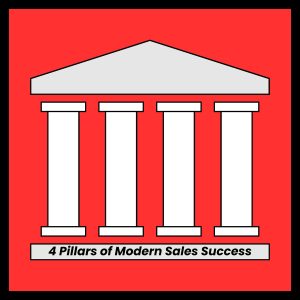
The four pillars that make this work — provocation, insight, systems, and execution — are worth examining closely before you build your implementation plan.
The Bottom Line: 4 Pillars of Modern Sales Success
Successful consultative selling isn’t a personality trait — it’s a blend of provocative insight and a rigorous execution system that any team can build and replicate.
The framework covered in this article comes down to four pillars that separate high-performing sales organizations from the rest. These aren’t abstract concepts. They’re operational commitments that show up in daily rep behavior, pipeline health, and close rates.
 Provocation over Passive Discovery: Provocative selling starts before the first discovery call. Challenge the buyer’s status quo early — use data, industry patterns, and sharp questions to surface pain they haven’t articulated yet. Buyers don’t reward reps who reflect their thinking back at them. They reward reps who reframe it.
- Insight as the Primary Value: Your perspective on the buyer’s business is worth more than any product feature you can demo. Reps who lead with insight earn trust faster and face less price resistance. Research confirms that buyers engage most with sellers who bring a credible point of view to the table.
- Systems over Heroes: One star rep closing deals on instinct is a liability, not an asset. Build a repeatable machine — consistent messaging, structured frameworks, shared playbooks — so every rep performs at a high level regardless of tenure.
- Execution is the Variable: Strategy is table stakes. The ‘how’ of the daily sales process — the questions asked, the follow-up cadence, the way objections are handled — determines whether your strategy actually converts to revenue.
Get these four pillars right, and you’re not just training better reps — you’re building a competitive advantage that compounds. The next step is to translate that into a scalable sales machine that your entire organization can run.
Building Your Own Unstoppable Sales Machine
Consultative selling is a system — and systems can be built, measured, and scaled across any team. It’s not a gift that some reps have and others don’t. It’s a disciplined set of behaviors: delivering provocative insights, rigorous discovery, stakeholder alignment, and execution that holds up under pressure.
The honest question for most sales leaders is this: where does your current execution break down? Is it in the quality of insights your reps bring to first meetings? Is your team’s ability to reframe a prospect’s thinking rather than just respond to it? Or does the gap live further downstream, in how deals stall when multiple stakeholders get involved?
Insight selling — leading with a perspective that challenges how buyers see their situation — is the clearest competitive differentiator available to sales teams right now. It’s what separates the vendor taking orders from the advisor shaping decisions. The teams that win consistently aren’t the ones with the best product pitch. They’re the ones prospects think of first when a problem gets urgent.
If you’re ready to close the gap between where your team performs today and what a fully systematized, provocative sales approach can deliver, explore the Unstoppable Sales Suite and Licensing programs. Implementation consulting and licensing for the proprietary framework are available for teams serious about becoming the Insight Leader in their space.
© Shawn Casemore 2026. All Rights Reserved.
Share This Article
Choose Your Platform: Facebook Twitter Google Plus Linkedin